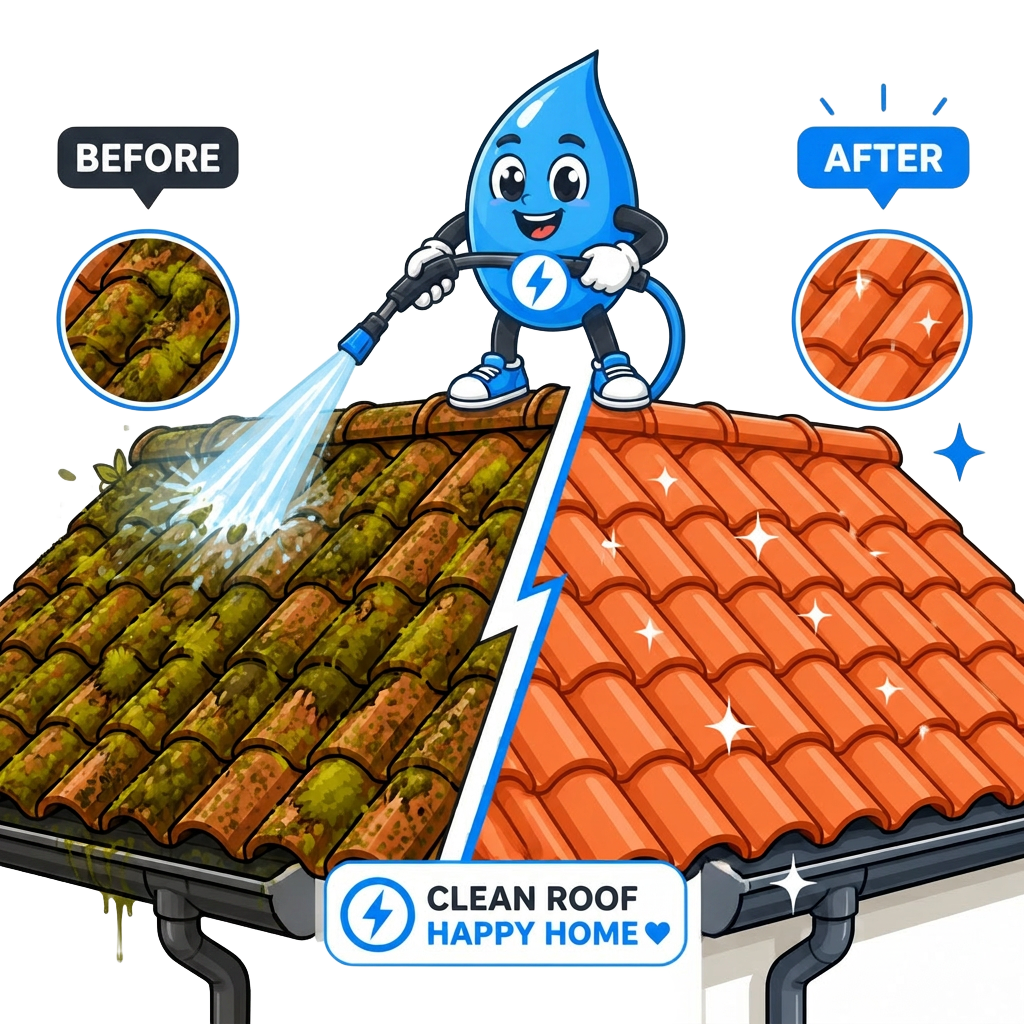
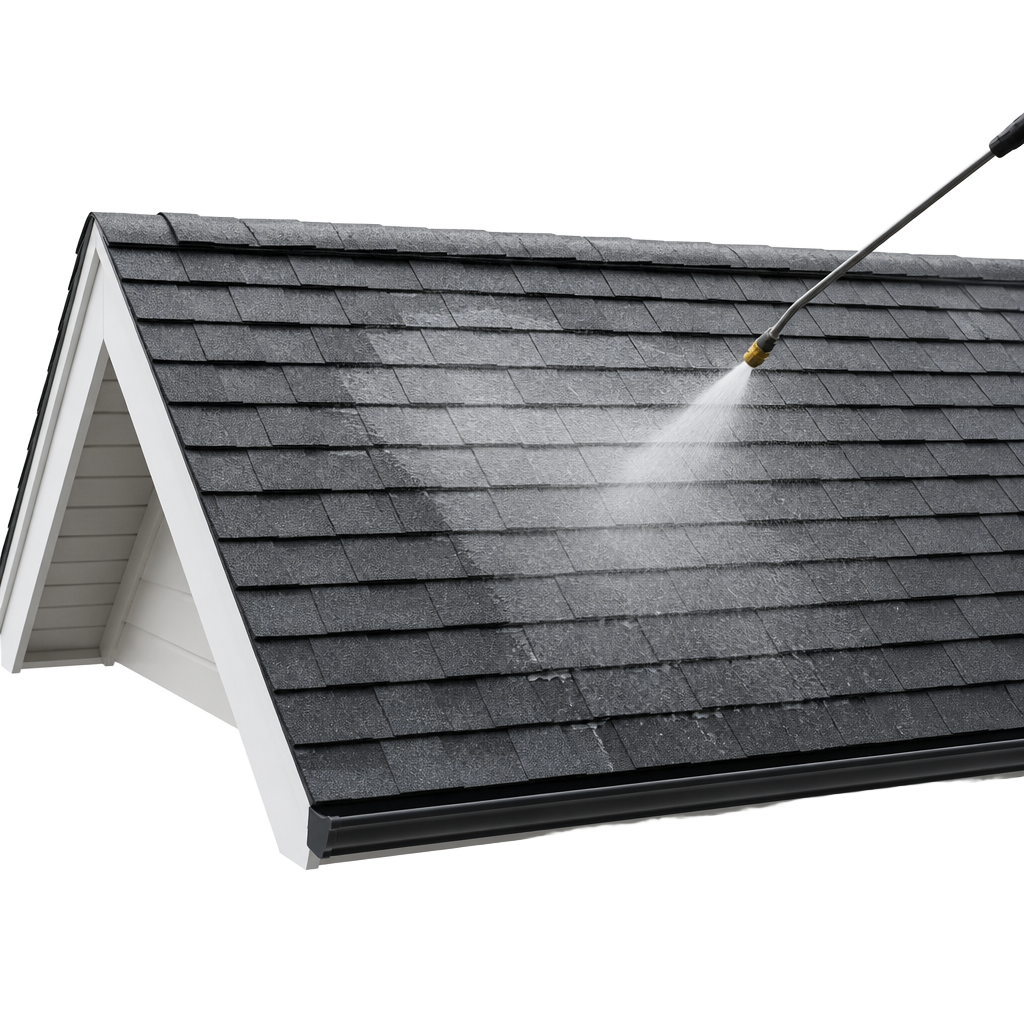
Soft wash only, zero high pressure
Roof Cleaning
Greater AdelaideAdelaide roof cleaning that removes moss and mould without cracking a single tile
We soft wash tile, Colorbond, decramastic and cement roofs across Adelaide using low-pressure equipment and roof-safe biocides. No jet blasting, no lifted coatings, no snapped ridge caps, just a clean roof that actually lasts.
Soft wash only, zero high pressure
Tile, Colorbond, cement and decramastic roofs
Free pre-clean roof inspection
Biocide treatment slows regrowth
Designed for the way Adelaide homes weather.
Built for how our climate actually treats your walls, roof and glass. Not a generic pressure clean.
Every visit. Every time.
A fixed scope written into your quote. No add-ons on the day.
Tile, Colorbond, cement and decramastic roofs
Free pre-clean roof inspection
Biocide treatment slows regrowth
Fully insured with safe roof access
Gutters and downpipes protected too
Everything worth knowing.
Straight answers, no fluff. Read what applies to your home, skip what doesn't.
Soft wash versus high pressure: why your tiles need the gentler method
High pressure roof cleaning looks fast and dramatic, but on Adelaide's concrete and terracotta roofs it strips the protective coating right off the tile surface, opens up hairline cracks, and dislodges bedding and pointing around ridge caps. Once that seal is compromised, water gets in and the damage keeps spreading long after the cleaner has left. Soft washing uses low pressure water combined with a roof-safe biocide solution to break down moss, lichen and algae at the root, so it lifts away without blasting the surface. This is the same principle professional roof restorers use before repointing or resealing a roof. We choose soft wash as the default method for almost every Adelaide home, reserving light pressure rinsing only for hard non-porous surfaces like glazed tile or metal where it genuinely will not cause damage.
Why Adelaide roofs grow moss and mould so quickly
Adelaide's mix of damp, cool winters, regular winter rainfall and shaded, tree-lined streets creates near perfect conditions for biological growth on roofs. Suburbs close to the coast and the western beach suburbs cop extra salt air and moisture, while leafy areas like the Adelaide Hills, Blackwood and the southern suburbs get shaded roof sections that never fully dry out between rain events. Moss and lichen take hold in these damp, shaded patches first, usually on the south-facing pitch or under overhanging branches, then spread across the whole roof over a few seasons. Black algae streaks tend to appear where dust and airborne spores wash down the roof pitch repeatedly. Left untreated, all of this growth holds moisture against the roof surface around the clock, which is exactly what accelerates tile degradation and Colorbond corrosion.
Tile, Colorbond, decramastic and cement: one clean does not fit all
Every roof type needs a slightly different approach. Terracotta and concrete tile roofs are porous, so moss and lichen actually grow roots into the surface, which is why gentle chemical treatment matters more than scrubbing. Colorbond and other metal roofs are non-porous but the factory paint finish can be dulled or scratched by abrasive methods, so we use low pressure and roof-safe detergents that will not void the manufacturer's coating warranty. Decramastic roofs have a stone chip coating bonded to the metal sheet, which can be knocked loose by high pressure, so these get the most conservative soft wash treatment of all. Cement and fibro roofs are older, more porous and sometimes brittle, so we assess condition carefully before applying any treatment. Knowing which roof you have changes the chemical dilution, dwell time and rinse pressure we use.
What causes moss, lichen and black streaks in the first place
Moss needs moisture, shade and a rough surface to anchor into, which is why it shows up first on porous tile in shaded valleys and under trees. Lichen is a combination of fungus and algae that bonds tightly to the roof surface and can be tougher to remove than moss alone. Black streaks, often called roof algae or gloeocapsa magma, are airborne spores that land on the roof and feed on the limestone filler in some tile coatings, then wash down the pitch in dark streaks with every rain event. None of these are just cosmetic. Moss holds water against the roof around the clock, lichen can lift tile edges as it grows, and black algae gradually breaks down protective coatings, which shortens the roof's usable life if left unaddressed for years.
Pre-clean inspection: checking for broken tiles, rust and failed flashings first
Before any water touches your roof, we walk the roof and check for broken or cracked tiles, rusted screws and fasteners on Colorbond roofs, and the condition of lead flashings around chimneys, skylights and valleys. Cleaning over a broken tile or a lifted flashing pushes water straight into the roof cavity, so we flag these issues before starting rather than after. This inspection also picks up loose ridge capping, worn pointing and any solar panel mounts that need extra care during the clean. If we find something that needs a tradesperson's attention beyond cleaning, such as a cracked tile or rusted fastener, we tell you honestly rather than clean around it and hope for the best.
Safety and roof access done properly
Roof cleaning is height work, and Adelaide's steep pitched roofs, two-storey homes and terrace roofs all present different access challenges. We use appropriate fall protection, harness anchor points where needed, and stable access equipment rather than freelancing up a ladder with a hose. Our team follows a safe work method statement for every job, which covers wet tile surfaces, powerline proximity for two-storey homes, and safe positioning of equipment on the ground below. This matters for your safety as much as ours, since a poorly managed roof clean can mean cracked tiles from foot traffic, damaged gutters from dragged hoses, or worse. We are fully insured for the work, which protects you if anything is damaged during the clean.
Biocide follow-up treatment to slow regrowth
A roof clean that only removes visible growth without treating the surface will usually show new moss and lichen within twelve to eighteen months, particularly in shaded Adelaide suburbs. After the soft wash removes the built-up growth, we apply a roof-safe biocide treatment that keeps killing spores and algae for months after we leave. This does not make the roof immune to regrowth forever, since spores are constantly landing from surrounding trees and neighbouring roofs, but it significantly slows the return of moss and black streaks compared to a wash-only job. Some Adelaide properties with heavy tree cover benefit from a lighter biocide top-up every twelve months to maintain results between full cleans.
Protecting gutters and downpipes during the clean
Roof cleaning dislodges a surprising amount of moss, lichen, sand grit and tile granules, all of which wants to end up in your gutters and downpipes. Before we start washing, we cover or divert gutter outlets where practical and check downpipe flow so runoff does not create a blockage halfway through the job. Once the roof clean is finished, we flush the gutters to clear collected debris rather than leaving it to compact and cause an overflow the next time it rains heavily. This step gets skipped by cheaper operators trying to save time, and it is one of the most common reasons homeowners end up with a blocked gutter within weeks of a roof clean they paid for.
Why we never pressure wash a Colorbond roof
Colorbond steel has a factory-applied paint and primer system that gives it its colour and corrosion resistance. High pressure water, especially combined with abrasive nozzle techniques, can etch, dull or strip this coating, exposing bare steel underneath to Adelaide's winter moisture and coastal salt air. Once that coating is compromised, rust can set in at the damaged spot even though the rest of the roof looks fine. Manufacturers are also clear that pressure washing can void coating warranties. Our approach for Colorbond is always low pressure combined with the right detergent dwell time, which lifts dirt, mould and algae without touching the paint film underneath. It takes a little longer than blasting it with a pressure washer, but it is the only method that protects the roof's finish and warranty long term.
Insurance and anchor points on every job
We carry full public liability insurance for every roof cleaning job we quote in Adelaide, and we ask to see the same from any competitor you are comparing us against. Where a roof needs a temporary anchor point for safe harness use, we use certified equipment rather than tying off to whatever is convenient, such as an antenna mount or plumbing vent that was never designed to take that load. This protects both the technician on the roof and your property below. If a job needs scaffolding or specialised access equipment because of pitch or height, we scope that honestly in the quote rather than discovering it halfway through the clean.
What to realistically expect from before and after results
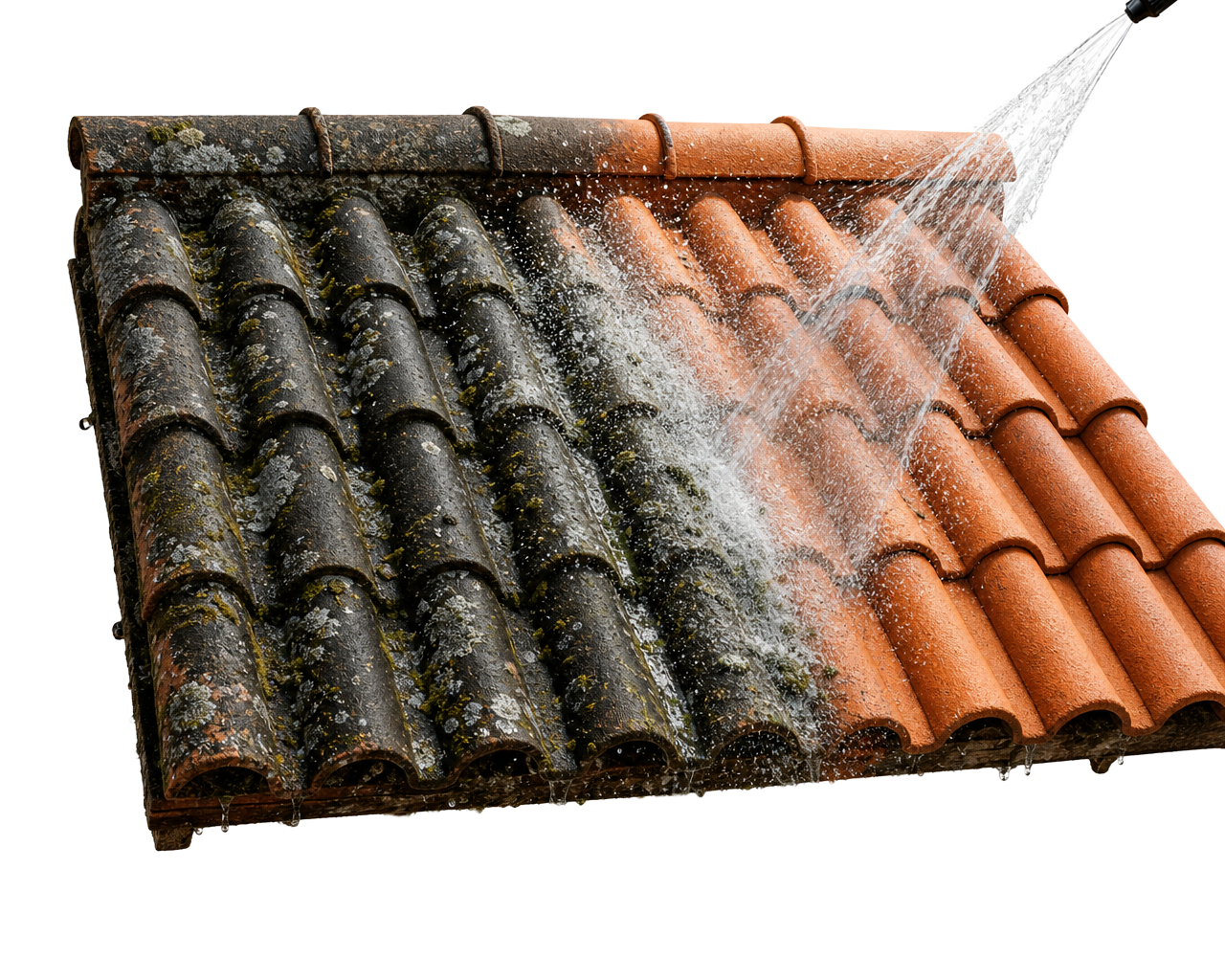
A soft wash roof clean removes visible moss, lichen and black algae staining and restores the roof's original colour and tile pattern, but it will not make a twenty-year-old roof look brand new if the coating itself has worn away underneath the growth. Some staining, particularly deep-set lichen on old porous tile, can leave a faint shadow even after treatment because the growth has etched into the tile surface over years. We always assess and photograph the roof before quoting so you know what result to expect, rather than promising a showroom finish that the roof's age and condition cannot deliver. Most Adelaide homes see a dramatic, obvious improvement, just with honest expectations set up front.
Keeping your roof clean between professional washes
Trimming back overhanging branches reduces shade and debris fall, which slows moss and lichen regrowth more than almost anything else you can do. Keeping gutters clear of leaf litter stops water pooling near the roof edge, which is a common spot for new moss growth to start. If your property is heavily shaded or close to the coast, a light biocide top-up every twelve months between full soft wash cleans keeps growth from re-establishing and can stretch the interval between full cleans out to three or four years. We can set a straightforward maintenance schedule for your specific roof and suburb so you are not paying for a full clean more often than your roof actually needs it.
Built on standards. Backed by cover.
Insured
Full public-liability cover
Every job, every crew. Certificate on request.
Standard
5.0
Across 100+ reviews
Google-verified. Real Adelaide homes, real ratings.
Rated · Google Reviews
Metro-wide
Western beaches to growth corridors
One team, covering all of Greater Adelaide end-to-end.
Coverage · 50+ suburbs
Answers before you ask.
Will soft wash roof cleaning damage my tiles or void my Colorbond warranty?+
No, that is the reason we use soft wash as the default method. High pressure is what damages tiles and can void Colorbond coating warranties, since it strips the factory paint and can crack or lift tile surfaces. Soft washing uses low pressure water paired with a roof-safe cleaning solution that breaks down moss, lichen and algae without blasting the surface underneath. We match the exact chemical dilution and dwell time to your roof type, whether it is terracotta tile, concrete tile, Colorbond, decramastic or cement, so the surface and any manufacturer coating stay intact.
How much does roof cleaning cost in Adelaide?+
Cost depends on roof size, pitch, access difficulty and how much growth needs removing, since a heavily moss-covered two-storey roof takes longer than a light clean on a single-storey home. We inspect the roof, either from the ground or with photos you send through, and provide a fixed-price quote before any work starts so there are no surprise costs once we are on the roof. Bundling roof cleaning with gutter clearing or house washing on the same visit is usually more cost effective than booking each service separately.
How often should I get my roof cleaned in Adelaide?+
Most Adelaide homes need a full roof clean every two to three years, though shaded properties near trees, the coast or the Adelaide Hills with heavy tree cover often need it closer to every eighteen months to two years. Properties on open, sunny blocks with little tree cover can sometimes stretch to three or four years between cleans. A biocide top-up treatment between full cleans can extend that interval further by slowing new moss and algae growth.
Can you remove lichen and dark stains completely?+
In most cases yes, soft washing removes lichen and black algae streaking effectively, restoring the roof's original colour. On very old, porous tile where lichen has been established for many years, some faint shadowing can remain because the growth has etched into the tile surface itself rather than just sitting on top of it. We assess this during the pre-clean inspection and let you know honestly what result to expect for your specific roof before quoting, rather than promising a result the roof's condition cannot deliver.
Is roof cleaning safe for older or brittle roof tiles?+
We inspect for cracked, brittle or already-broken tiles before starting any clean, since walking on a damaged roof or applying the wrong pressure can make existing problems worse. Soft washing itself is low impact because it relies on chemical action rather than force, which makes it the safer choice for older cement and terracotta roofs. Where we find tiles too fragile or damaged to safely walk near, we flag this before starting and adjust our access plan, or recommend repair first if the roof genuinely needs it.
Do you clean gutters and downpipes as part of the roof clean?+
We protect gutter outlets during the wash to limit debris going down the downpipes, and we flush gutters after the roof clean to clear moss, lichen and grit that has washed down during the process. This step prevents the common problem of a freshly cleaned roof causing a gutter blockage within weeks because debris was left to settle and compact. If your gutters need a full internal clean and inspection rather than just a post-clean flush, we can quote that as an add-on to the roof cleaning job.
One crew. Whole exterior.
Bundle any of the below with your quote. One visit, one invoice, sharper price.
House WashingSoft-wash render, brick, weatherboard and Hardie.Roof TreatmentKill moss, lichen and algae at the root.Gutter CleaningHand-cleared. Downpipes flushed. Flow verified.Driveway CleaningSurface-cleaner pressure wash for concrete and pavers.Window CleaningPure water pole outside, hand-squeegee inside.Solar Panel CleaningReclaim lost output with a soft-brush pure water rinse.
Servicing your suburb.
Regular runs from the western beaches through the inner east and out to the northern and southern growth corridors.
- Burnside
- Walkerville
- Medindie
- Gilberton
- North Adelaide
- Prospect
- Henley Beach
- Grange
- Semaphore
- Largs Bay
- West Lakes
- Tennyson
- Outer Harbor
- Norwood
- Kent Town
- Stepney
- Hackney
- Stirling
- Aldgate
- Bridgewater
- Glenelg
- Somerton Park
- Brighton
- Seacliff
- Hallett Cove
- Marion
- Kensington
- Henley Beach South
- Unley
- Hazelwood Park
- Toorak Gardens
- Parkside
- Erindale
- Adelaide CBD
- Bowden
- Croydon
- Brompton
- Mile End
- Richmond
- Torrensville
- Dulwich
- Woodville
- Thebarton
- Hindmarsh
- Port Adelaide
- Alberton
- Findon
- Fulham
- Lockleys
- Kidman Park
- Flinders Park
- Modbury
- Golden Grove
- Tea Tree Gully
- Ingle Farm
- Greenwith
- Athelstone
- Salisbury
- Gawler
- Munno Para
- Andrews Farm
- Angle Vale
- Elizabeth
- Virginia
- Two Wells
- Mount Barker
- Nairne
- Aberfoyle Park
- Morphett Vale
- Noarlunga
- Aldinga
- Seaford
- Blackwood
- Mitcham
- Christies Beach
- Edwardstown
- Plympton
- Glandore
Suburb not listed? We still service it, send a request and we'll confirm the next available slot in your postcode.
Book your clean.
Send a request. We reply with your quote, usually within minutes.