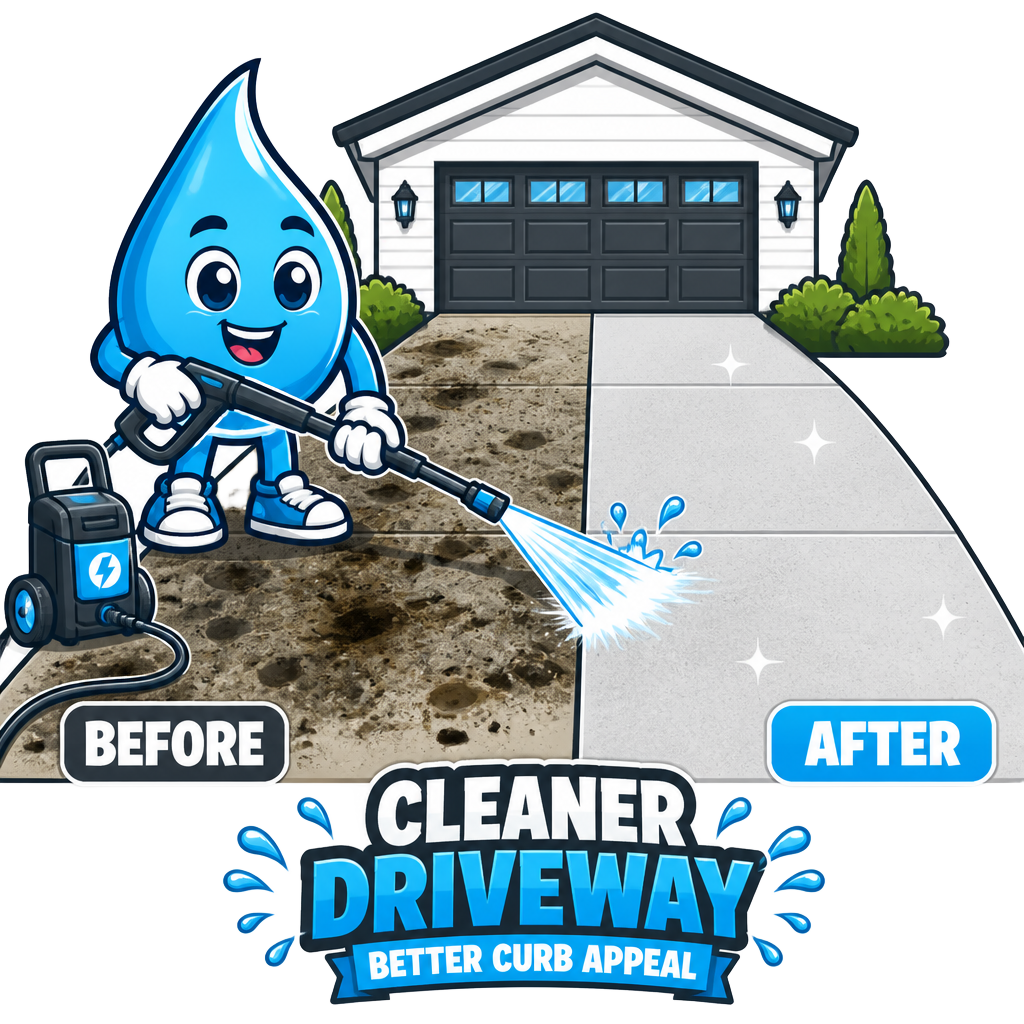
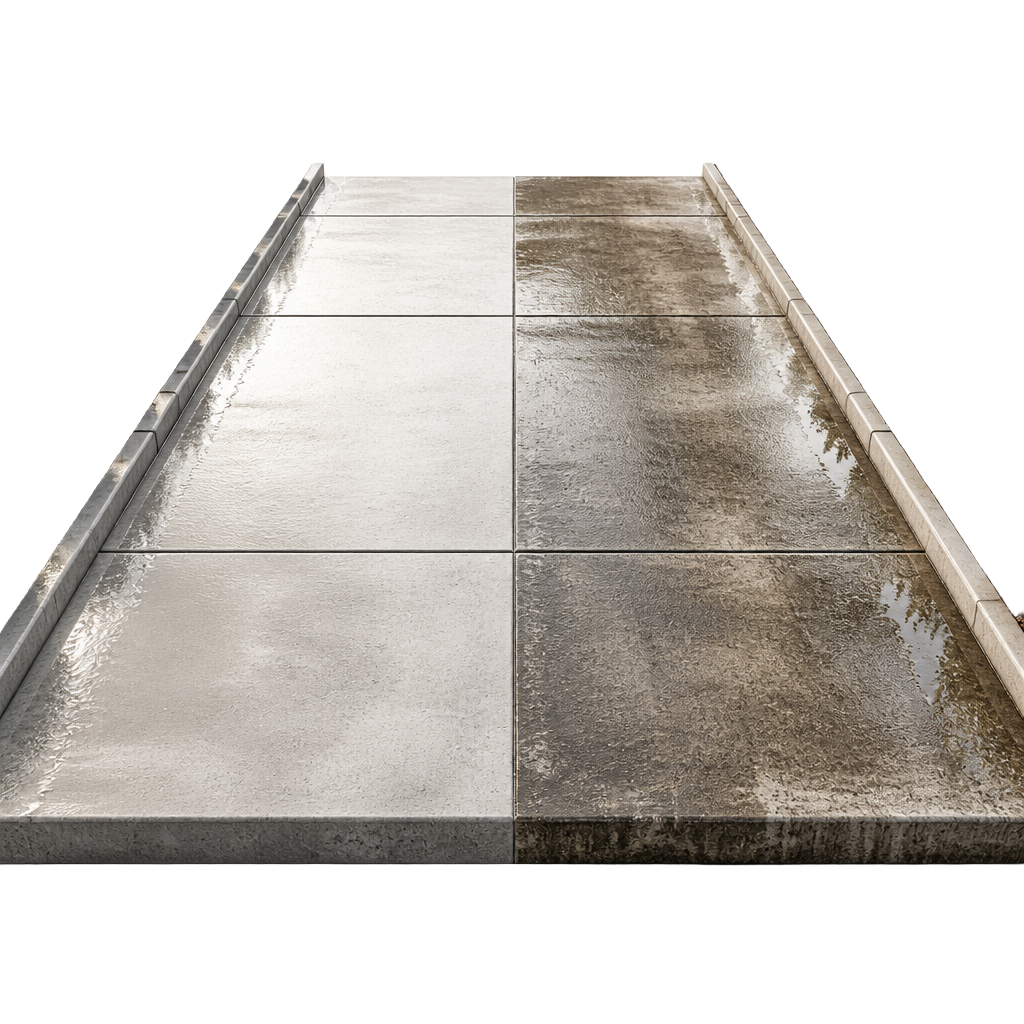
Surface cleaner tool, zero stripes
Driveway Cleaning
Greater AdelaideAdelaide Driveway Cleaning With Surface Cleaner Technology
Black streaks, oil stains and lichen build-up make even a tidy home look neglected. We use rotary surface cleaner attachments, not a handheld wand, so your concrete, exposed aggregate or paved driveway comes back even and streak-free instead of striped.
Surface cleaner tool, zero stripes
Concrete, aggregate, pavers, sandstone safe
Pre-treats oil and tyre marks
Removes black lichen and mould
Designed for the way Adelaide homes weather.
Built for how our climate actually treats your walls, roof and glass. Not a generic pressure clean.
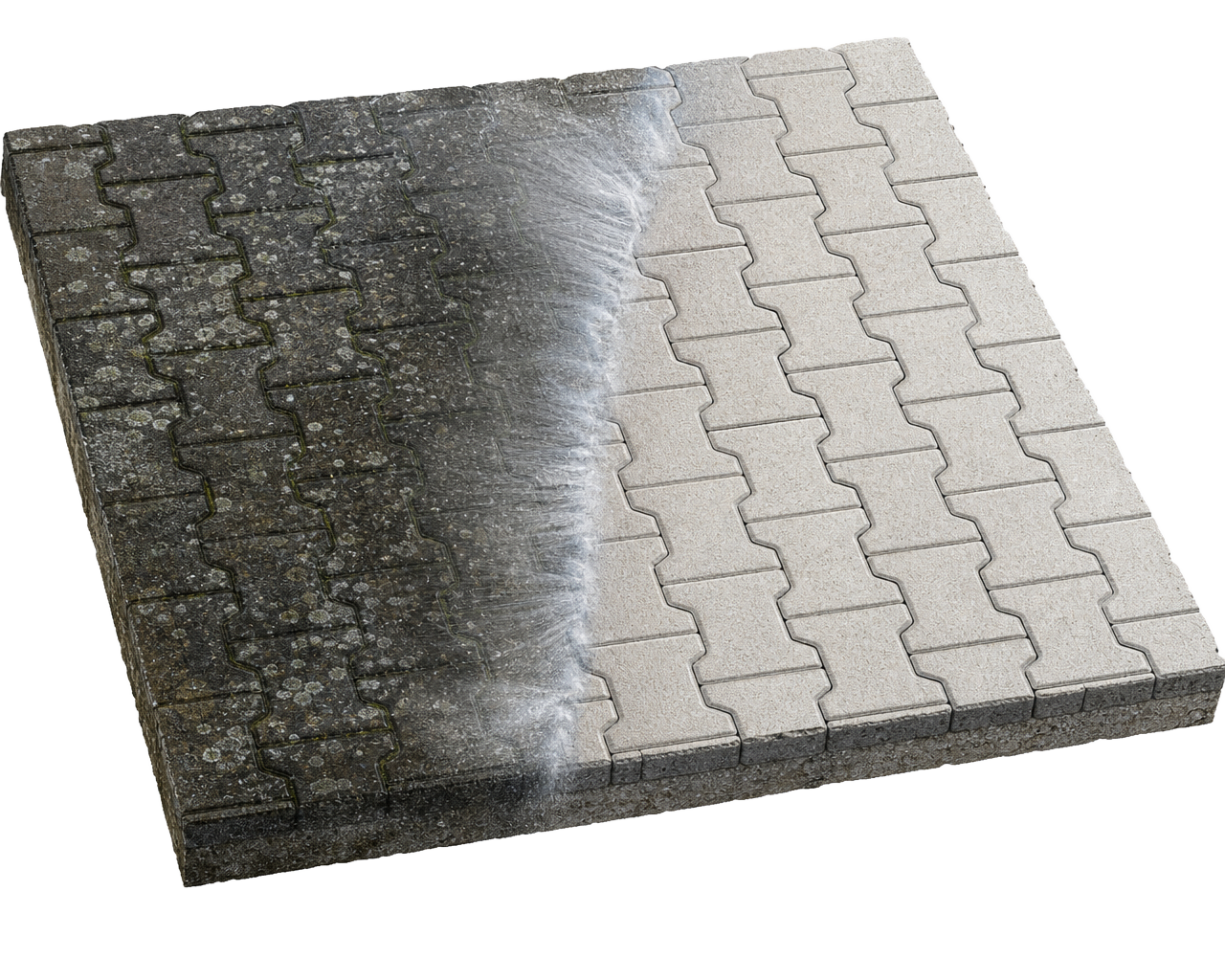
Every visit. Every time.
A fixed scope written into your quote. No add-ons on the day.
Concrete, aggregate, pavers, sandstone safe
Pre-treats oil and tyre marks
Removes black lichen and mould
Water captured and recycled
Free quote, fully insured team
Everything worth knowing.
Straight answers, no fluff. Read what applies to your home, skip what doesn't.
Surface Cleaner vs Wand: Why Technique Matters
A lot of driveway jobs in Adelaide go wrong before the water even hits the concrete, because the operator is using a handheld wand instead of a rotary surface cleaner. A wand relies on a single narrow jet swept by hand, and even the steadiest arm leaves overlapping bands of clean and dirty concrete once it dries, known as tiger striping. A surface cleaner is a flat disc housing that spins two or more jets underneath a covered hood at a fixed height and consistent overlap, distributing pressure evenly across a wide path in one pass. That means uniform cleaning across the whole slab, no dark bands, no lighter patches where the operator paused, and a genuinely even finish edge to edge. It also controls overspray, which matters when your driveway sits close to garden beds, garage doors or a neighbour's fence line. We use surface cleaners as standard on every open driveway area and reserve the wand for edges, steps and tight corners where the disc cannot reach, giving you the best of both tools rather than relying on one alone.
Concrete, Exposed Aggregate, Pavers and Stone: Different Surfaces, Different Approach
Plain broom-finish concrete is the most forgiving surface and handles higher pressure well, so we clean it briskly and get strong results fast. Exposed aggregate has decorative stones set slightly proud of the cement paste, and the recessed mortar between them collects grime that plain concrete does not, so it needs a slower pass and sometimes a pre-treatment to lift ingrained dirt from those low points without eroding the surrounding paste. Clay or concrete pavers have joints filled with sand or jointing compound, and blasting those joints out at close range leaves gaps that invite weeds and ants, so we hold a wider nozzle distance and lower pressure near joint lines. Natural stone such as sandstone, bluestone or granite tiles varies enormously in hardness from one slab to the next, so we always test an inconspicuous corner first and dial pressure down for anything soft or already pitted. Matching the method to the material is the difference between a driveway that looks new and one that looks new but now has damaged joints or eroded aggregate.
Oil, Tyre Marks, Rust and Leaf Tannin: Pre-Wash Treatment
Straight pressure water alone will not shift everything sitting on an Adelaide driveway. Fresh oil drips and old tyre transfer marks are usually greasy residue bonded into the surface pores, so we apply a degreasing pre-treatment and let it dwell before washing, which lifts far more than pressure alone. Rust stains, common under garden taps, old furniture legs or steel gate posts, need a mildly acidic rust converter rather than detergent, since regular cleaner will not touch iron staining. Leaf and jacaranda tannin stains, very common under Adelaide's street trees in autumn, leave a tea-coloured shadow on concrete that needs a specific oxidising treatment to fully clear rather than just fade. Mould and black lichen get their own biocide treatment first to kill the organism at the root, because pressure washing alone just knocks the visible growth off the surface without killing the spores, meaning it returns within weeks. We assess every driveway on arrival and match the pre-treatment to what is actually staining it, not a single generic wash-and-go product.
Why Adelaide Driveways Go Black: Winter Moisture and Lichen
If your driveway has developed a dark, almost sooty black coating rather than plain dirt, that is very likely gloeocapsa magma or a similar lichen and algae growth, not grime. Adelaide's cool, wetter winters give these organisms the moisture they need on shaded or south-facing concrete, especially driveways bordered by trees, garden beds or high fences that block sun and airflow. It spreads fastest on porous surfaces like plain concrete and exposed aggregate, and once established it holds moisture against the surface, which can accelerate surface wear over time. Simply pressure washing the black layer off gives a good short-term result, but without a biocide treatment the spores left behind regrow within a few months, often faster in shaded corners. That is why we treat black staining as a biological problem first and a cosmetic one second, applying a proper treatment rather than just blasting the surface clean and hoping it stays that way.
Sandstone Driveways: A Note on Softness
Sandstone is common on older Adelaide properties and heritage-style homes, and it is genuinely beautiful once cleaned, but it is also one of the softer natural stones and needs a more cautious approach than concrete. High pressure held too close or for too long can erode the surface, round off crisp edges, or strip away the natural patina that gives sandstone its character, leaving a patchy or overly pale result that looks worse than the original staining. We always start with a test patch, use a wider fan angle and greater standoff distance on sandstone, and rely more heavily on chemical pre-treatment and lower pressure dwell time rather than raw force to lift dirt and biological growth. If a sandstone driveway is already flaking, spalling or has previously been sealed with a coating that is failing, we will tell you honestly before starting, because pressure washing can sometimes accelerate existing damage rather than cause it. Getting sandstone right takes patience, and that is exactly how we approach it.
Efflorescence: What Cleaning Can and Cannot Fix
Efflorescence is the white, chalky, salt-like deposit that appears on concrete and pavers, caused by mineral salts within the material being drawn to the surface by moisture and left behind as the water evaporates. It is extremely common on newer concrete driveways in Adelaide, particularly after heavy rain periods, and it is not dirt, so a standard wash will only partially improve its appearance. A dedicated efflorescence treatment can dissolve and remove the surface deposit and noticeably improve the look of the driveway, and we are happy to apply one as part of a clean. What we will not do is promise it is gone forever, because efflorescence is driven by moisture moving through the concrete itself and can reappear after future rain, particularly in the first year or two after a slab is laid while it continues to cure. We set this expectation upfront so you know exactly what a clean can achieve and are not surprised if a light bloom returns later.
Should You Seal Your Driveway After Cleaning
A freshly cleaned driveway is the ideal time to seal it, because sealing locks in that clean look and makes the next clean considerably easier. A quality penetrating or film-forming sealer reduces how deeply oil, tyre marks and organic staining can bind into the surface pores, so future spills sit on top rather than soaking in, and a hose or light wash lifts them far more easily. It also slows the return of lichen and mould by reducing surface porosity and moisture retention, directly addressing the black staining issue common across Adelaide. Sealing is optional and not every driveway needs it, particularly plain concrete in full sun with low tree cover, but for shaded exposed aggregate, sandstone or paved driveways under trees, it is genuinely worthwhile and typically lasts several years before needing a reapplication. We can quote sealing as an add-on to your clean, applied only once the surface has fully dried, so you get maximum protection from day one rather than trapping moisture underneath.
Water Use and Recycling on Every Job
Adelaide households are conscious of water use, and a professional driveway clean is generally far more water-efficient than it looks, because commercial pressure equipment uses less volume per minute than a garden hose while delivering far more cleaning force. Where possible we contain and direct wash water away from stormwater drains, particularly important when treating oil or chemical residue, since untreated wastewater running into the gutter can end up straight into Gulf St Vincent or local waterways. We use biodegradable, low-toxicity cleaning products wherever the job allows, minimising environmental impact on garden beds, lawns and nearby waterways. For larger commercial or strata driveways, we can arrange water capture and responsible disposal in line with council requirements. If you are on tank water or have specific water restrictions in place, let us know before the job and we will plan the clean accordingly, so you get a spotless driveway without the guilt or the compliance headache.
Kerb Appeal, Resale Value and First Impressions
The driveway is often the first surface a visitor, buyer or agent actually touches before they reach your front door, and a stained, streaky or moss-covered driveway sets a negative tone before anyone steps inside. Real estate agents across Adelaide regularly recommend a driveway and path clean ahead of photography and open homes, because it is one of the cheapest, fastest ways to lift a property's presentation, often making a bigger visual difference per dollar than fresh paint or landscaping. Even outside a sale, a clean driveway simply makes a home feel better cared for day to day, and it is usually the first thing you and your family see arriving home each evening. Given how quickly black lichen, oil staining and general grime build up in Adelaide's climate, a driveway clean is one of the most cost-effective presentation upgrades available, whether you are preparing to list, hosting a family event, or just tired of looking at a tired concrete slab every time you pull in.
Bundle Your Driveway With Paths, Steps and Pool Coping
Driveways rarely exist in isolation, and the same lichen, dirt and mould affecting your driveway is almost always creeping across connected paths, entry steps and, if you have a pool, the coping stones around it. Because we bring the surface cleaner, pre-treatments and equipment on site regardless of area size, cleaning adjoining hard surfaces in the same visit is far more cost-effective than booking separate call-outs later, and it gives your whole property a consistent, freshly finished look rather than one clean patch next to grubby paving. Pool coping in particular benefits from the same treatment as a driveway since it faces similar mould and algae pressure from moisture, and a slippery pool surround is a genuine safety concern for kids and older family members. When you book, let us know what else is on the property, whether that is a side path, alfresco area, front steps or coping, and we will quote it as one combined job with one call-out rather than treating each surface separately.
Keeping Your Driveway Clean Between Visits
A single clean will not stay perfect forever in Adelaide's climate, but a few simple habits stretch the time between professional cleans considerably. Sweeping leaves and organic debris off the driveway regularly stops tannin staining and mould spores from ever getting a foothold, particularly under trees that drop leaves through autumn. Wiping up fresh oil or fuel drips as soon as you notice them, rather than letting them sit, prevents deep staining that later needs a strong degreaser to shift. Trimming back overhanging branches and garden growth that shade the driveway improves airflow and sun exposure, both of which naturally slow lichen and mould regrowth. If you had the driveway sealed, an occasional hose down keeps surface dirt from building up on top of the sealer rather than into the concrete itself. Most Adelaide homes get a genuinely clean, presentable driveway with a professional clean every 12 to 18 months, though shaded or heavily treed properties may benefit from a shorter cycle closer to 12 months.
Built on standards. Backed by cover.
Insured
Full public-liability cover
Every job, every crew. Certificate on request.
Standard
5.0
Across 100+ reviews
Google-verified. Real Adelaide homes, real ratings.
Rated · Google Reviews
Metro-wide
Western beaches to growth corridors
One team, covering all of Greater Adelaide end-to-end.
Coverage · 50+ suburbs
Answers before you ask.
How much does driveway cleaning cost in Adelaide?+
Cost depends mainly on driveway size, surface type and how much staining or biological growth needs treating before washing. A standard double garage concrete driveway is generally quicker and cheaper to clean than a large exposed aggregate or sandstone paved driveway needing pre-treatment for oil, mould or efflorescence. Bundling the driveway with an adjoining path, steps or pool coping in the same visit typically reduces the per-square-metre cost compared to booking each area separately. We provide a free, obligation-free quote based on photos or an on-site look, and our pricing accounts for the specific surface, level of staining and any treatments required, so you get an accurate figure rather than a generic estimate that changes on the day.
Will pressure washing damage my exposed aggregate or sandstone driveway?+
Not when it is done properly with the right pressure, nozzle distance and technique matched to the surface. Exposed aggregate can be damaged if pressure is held too close or too high, eroding the cement paste around the decorative stones, and sandstone can be worn or discoloured if treated the same as hard broom-finish concrete. We always assess the specific surface, test an inconspicuous patch first, and adjust pressure, standoff distance and dwell time accordingly, relying more on chemical pre-treatment and less on raw force for softer materials. Genuine damage almost always comes from generic, one-size-fits-all pressure washing rather than the process itself, which is why matching technique to material is central to how we work.
Why does my driveway keep going black even after cleaning?+
Black staining on Adelaide driveways is usually gloeocapsa magma, a lichen and algae growth that thrives where winter moisture lingers, especially on shaded or south-facing concrete near trees, garden beds or fences that block sunlight and airflow. Pressure washing alone removes the visible growth but leaves microscopic spores behind in the porous surface, so it regrows within months if not treated properly. We apply a biocide treatment to kill the organism at the root rather than just blasting the surface clean, and sealing afterwards further slows regrowth by reducing how much moisture the surface holds. Trimming back overhanging growth to improve sun and airflow also genuinely helps slow the return between cleans.
Can you fully remove oil stains and efflorescence from concrete?+
Oil stains generally respond very well to a proper degreasing pre-treatment with adequate dwell time before washing, and most lift substantially, though very old, deeply penetrated stains may leave a faint shadow rather than disappearing completely. Efflorescence, the white chalky salt deposit common on newer concrete, can be treated and visually improved with a dedicated treatment, but because it is caused by mineral salts moving through the concrete itself rather than surface dirt, it can return after future rain, particularly on slabs still curing in their first year or two. We treat both honestly, aiming for the best realistic result and explaining upfront what a clean can and cannot permanently fix.
Should I seal my driveway straight after it is cleaned?+
Yes, immediately after cleaning is the best time to seal, because the surface is free of dirt, oil and biological growth, so the sealer bonds properly and protects a genuinely clean surface rather than sealing stains in. Sealing reduces how deeply future oil, tyre marks and organic staining can penetrate the surface pores, making the next clean much easier, and it also slows lichen and mould regrowth by reducing moisture retention, which is a common issue in Adelaide's climate. It is not compulsory for every driveway, particularly sun-exposed plain concrete with low tree cover, but for shaded, treed or paved driveways it is genuinely worthwhile and typically lasts several years.
How often should driveways be professionally cleaned in Adelaide?+
Most Adelaide homes get a clean, presentable result from a professional clean every 12 to 18 months, though this varies with tree cover, shade and how exposed the driveway is to street dirt and rain. Heavily shaded or treed properties, which see faster lichen, mould and leaf tannin build-up, often benefit from a shorter cycle closer to 12 months, while sun-exposed plain concrete with minimal tree cover can sometimes stretch beyond 18 months. Sealing after a clean also extends the interval by slowing how quickly staining and organic growth re-establish. We are happy to recommend a realistic schedule based on your specific driveway and its surroundings during your quote.
One crew. Whole exterior.
Bundle any of the below with your quote. One visit, one invoice, sharper price.
House WashingSoft-wash render, brick, weatherboard and Hardie.Roof TreatmentKill moss, lichen and algae at the root.Roof CleaningSoft-wash clean for tile and Colorbond roofs.Gutter CleaningHand-cleared. Downpipes flushed. Flow verified.Window CleaningPure water pole outside, hand-squeegee inside.Solar Panel CleaningReclaim lost output with a soft-brush pure water rinse.
Servicing your suburb.
Regular runs from the western beaches through the inner east and out to the northern and southern growth corridors.
- Burnside
- Walkerville
- Medindie
- Gilberton
- North Adelaide
- Prospect
- Henley Beach
- Grange
- Semaphore
- Largs Bay
- West Lakes
- Tennyson
- Outer Harbor
- Norwood
- Kent Town
- Stepney
- Hackney
- Stirling
- Aldgate
- Bridgewater
- Glenelg
- Somerton Park
- Brighton
- Seacliff
- Hallett Cove
- Marion
- Kensington
- Henley Beach South
- Unley
- Hazelwood Park
- Toorak Gardens
- Parkside
- Erindale
- Adelaide CBD
- Bowden
- Croydon
- Brompton
- Mile End
- Richmond
- Torrensville
- Dulwich
- Woodville
- Thebarton
- Hindmarsh
- Port Adelaide
- Alberton
- Findon
- Fulham
- Lockleys
- Kidman Park
- Flinders Park
- Modbury
- Golden Grove
- Tea Tree Gully
- Ingle Farm
- Greenwith
- Athelstone
- Salisbury
- Gawler
- Munno Para
- Andrews Farm
- Angle Vale
- Elizabeth
- Virginia
- Two Wells
- Mount Barker
- Nairne
- Aberfoyle Park
- Morphett Vale
- Noarlunga
- Aldinga
- Seaford
- Blackwood
- Mitcham
- Christies Beach
- Edwardstown
- Plympton
- Glandore
Suburb not listed? We still service it, send a request and we'll confirm the next available slot in your postcode.
Book your clean.
Send a request. We reply with your quote, usually within minutes.